
STARFLEET TECHNICAL REFERENCE · 2371
Starfleet Equipment
USS Ermiana · 2371 · Duty equipment and away-team kits
Use this guide to choose what a crewmember carries on watch, what a department brings on an away mission, and which equipment belongs in a scene.
Standard equipment
Communicator badge
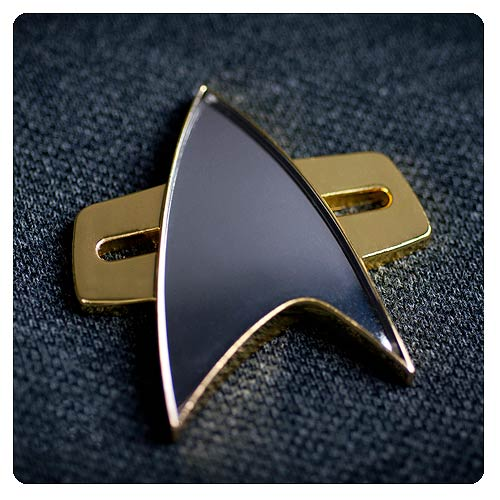
The combadge connects its wearer to the ship and nearby teams. Tap it and identify who you are calling. It can also help the ship locate a crewmember for a transporter pickup when conditions permit. Signal interference, loss of relay coverage and local shielding can all complicate a call. The silver delta on a gold bar is the Starfleet badge design introduced in 2371.
Personal Access Display Device (PADD)
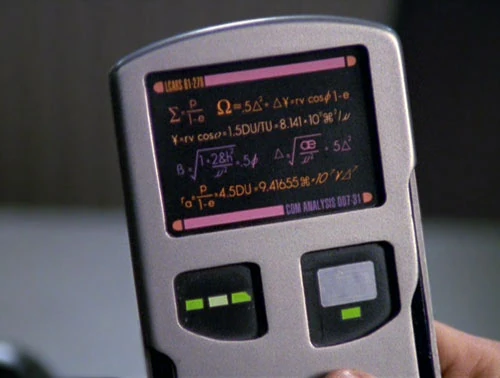
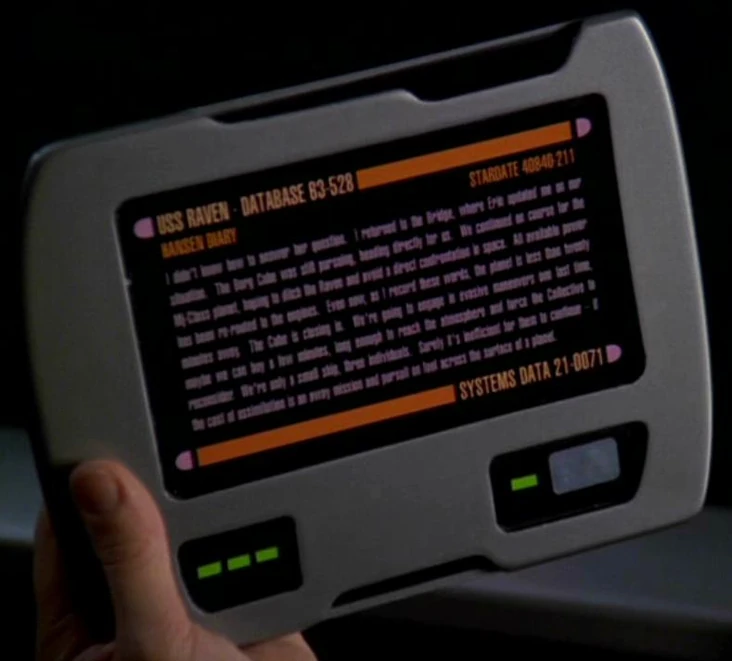
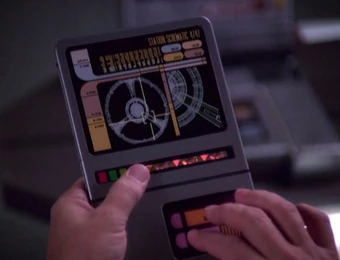
A PADD is a handheld LCARS device for reading records, taking notes and reviewing reports or plans. Smaller models are easy to carry on rounds. A wider display is handy for schematics and longer documents. Load any critical maps or checklists locally before an away mission where the team might lose its link to the ship.
Uniform and duty issue
Use the Ermiana uniform guide for division colours and duty variants. Select tools for the assignment. A routine watch may need a combadge and a PADD, while an away team adds scanners, specialist kits or authorised security equipment.

See Shipboard communications for relay limitations and distress beacons and Computer Systems for LCARS.
See Away Team Guidelines and Protocols to choose mission roles and a field kit.
Tricorders
The TR-580 Mark VII is the established flip-open field tricorder. The TR-590 Mark X was introduced in 2371 alongside it. Both designs fit the period. Use the established model for routine issue and the newer one where a scene establishes that it is available.
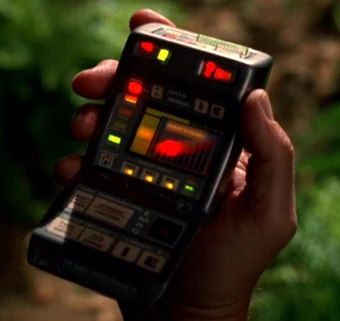
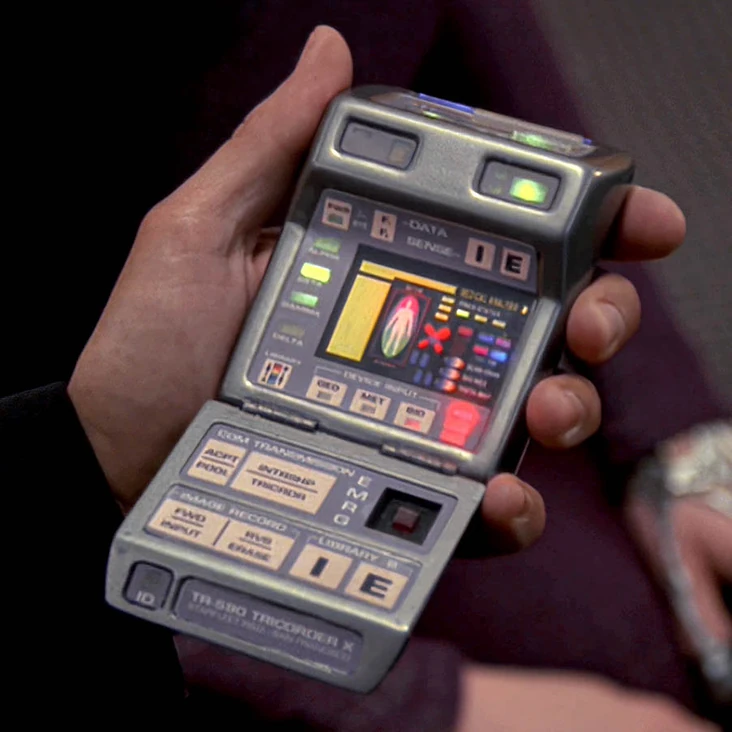
| What the crew needs | Scan to write |
|---|---|
| Check an unfamiliar site | Survey the atmosphere, radiation, lifesigns or unusual energy readings. Follow a broad sweep with a closer scan of specific findings. |
| Find a system fault | Use an engineering-configured tricorder to trace the affected circuit, conduit or emission. Compare the local reading with the console diagnostics. |
| Assess a patient | Use a medical tricorder to check vital signs and look for injury. A detachable hand sensor lets the medic scan a specific area and read the result on the main unit. |
Report what was measured, where it was measured and what may be interfering with the reading. A scan can give the crew a lead that still needs a second reading, a sample or a laboratory analysis.
Engineering kit
For a field repair, an engineer can bring a configured tricorder, a PADD with schematics, a hyperspanner, a hand calibrator and suitable spares. A plasma torch or specialist field equipment can be issued for a particular job. Give the repair team a concrete task, such as opening a damaged access panel, checking a replacement coupling or verifying that power has been rerouted.
See System diagnostic levels when Engineering calls for a computer test or manual verification. The protective equipment guide covers environmental suits for hazardous compartments and exterior work.
Medical equipment
A field medkit can carry a medical tricorder and hand sensor, a hypospray for needleless delivery of medication, and a dermal regenerator for certain tissue injuries. The medic can also bring supplies for monitoring and stabilising a patient until Sickbay can receive them. Specialist instruments and medications depend on the mission and the patient.
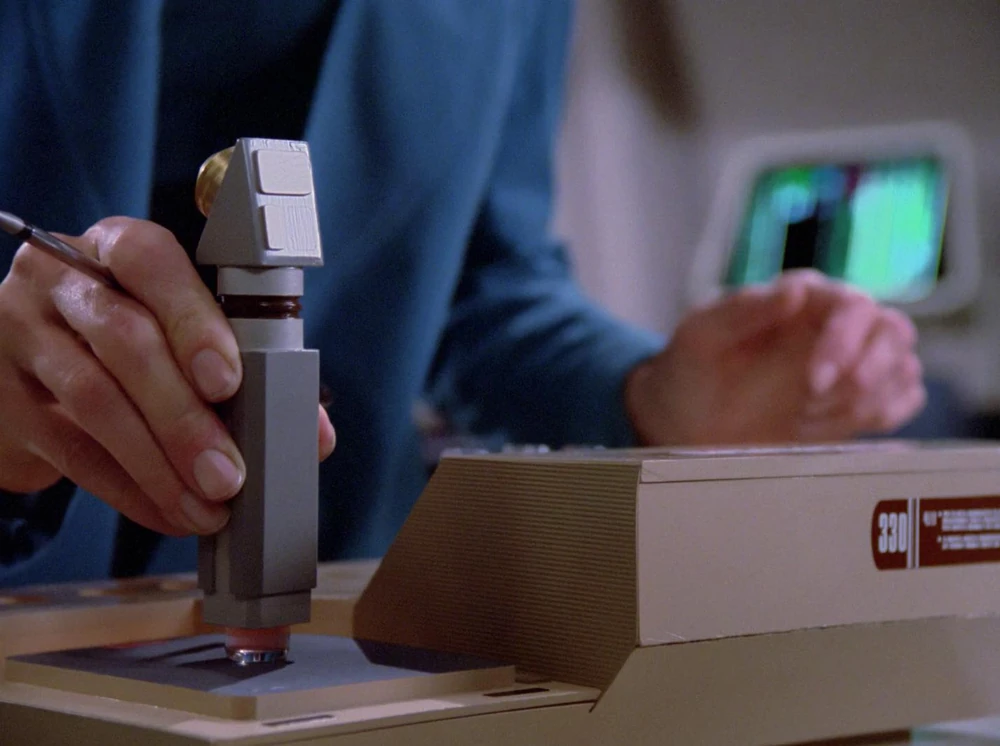
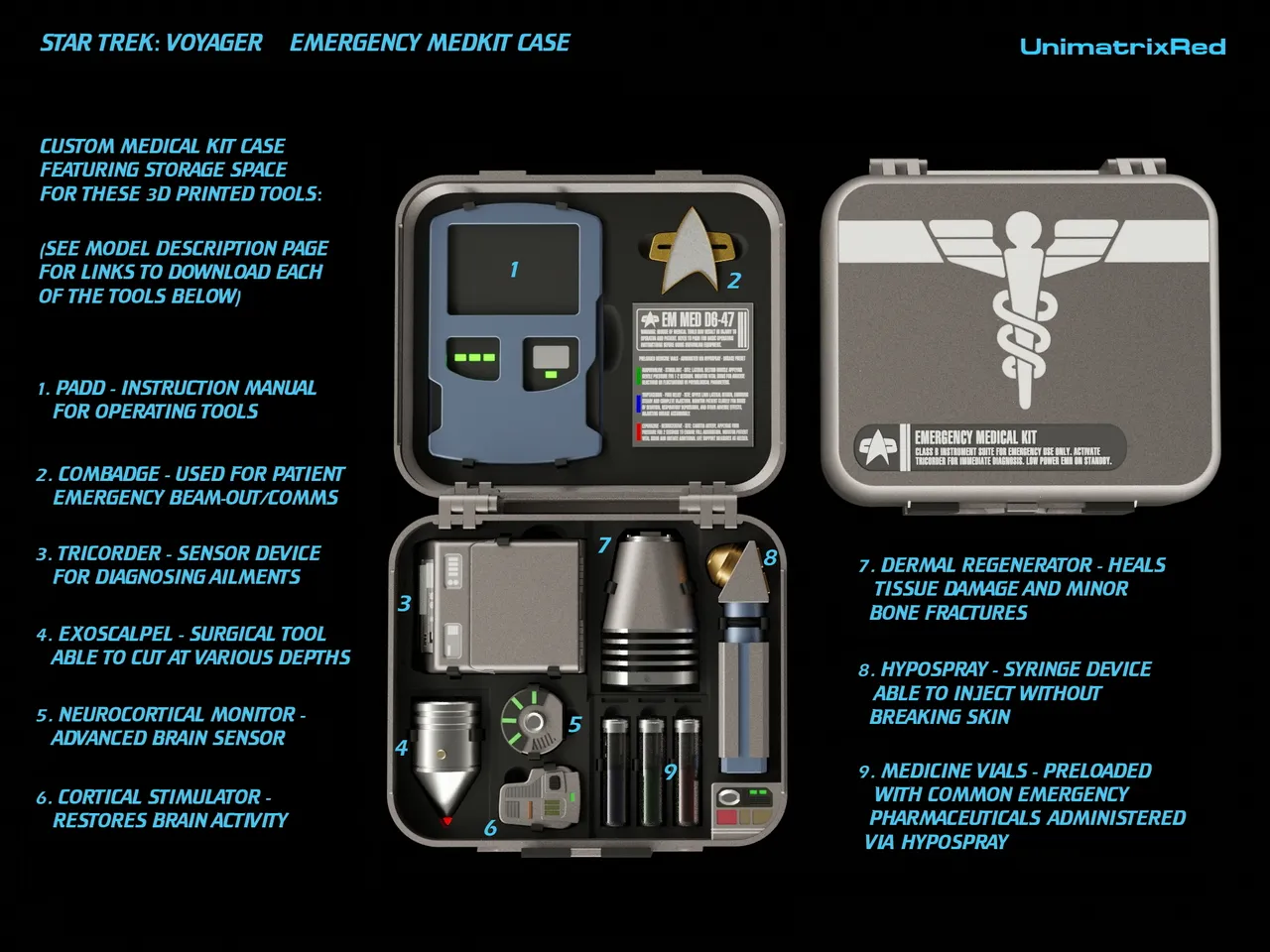
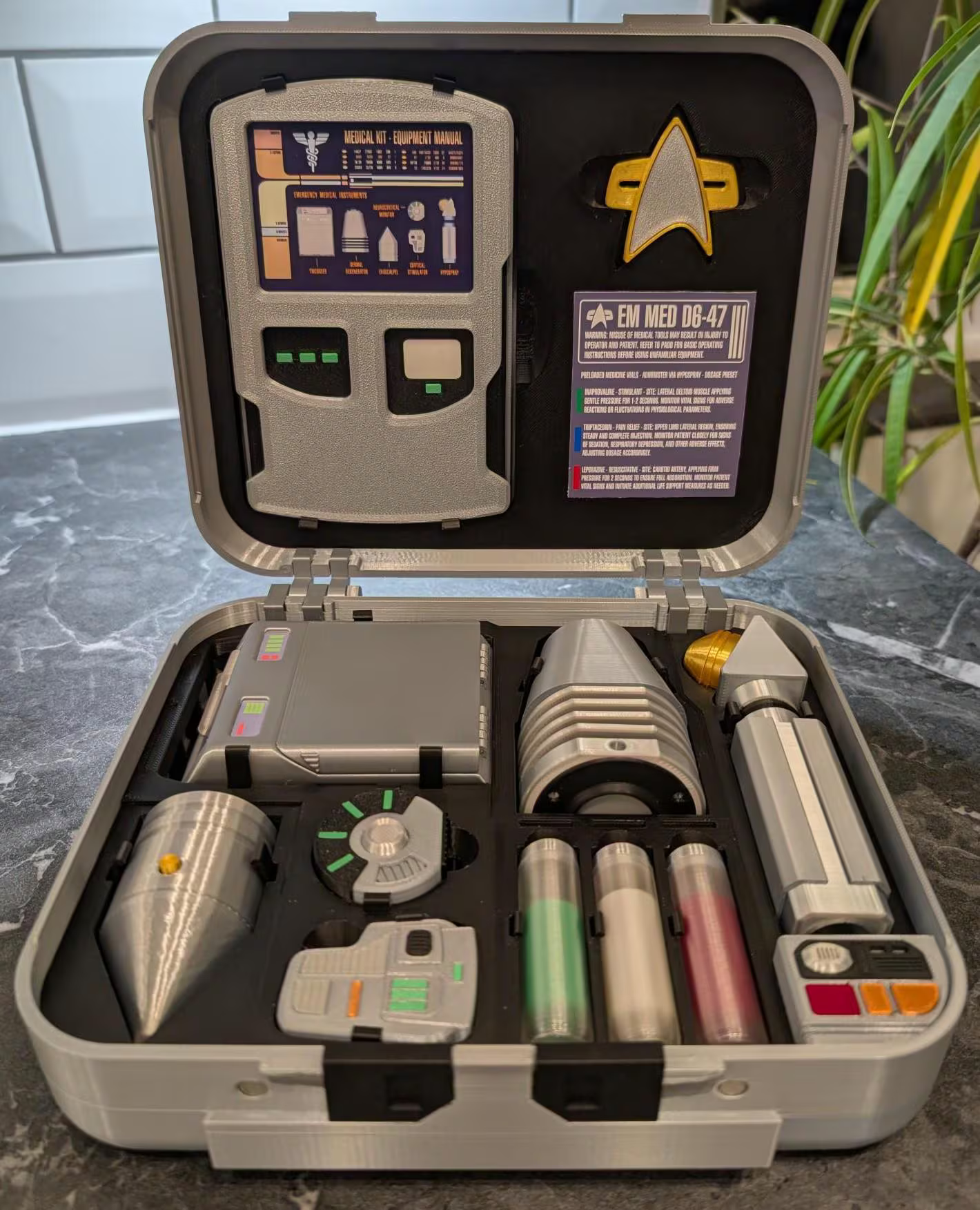
In a handover, have the medic identify the patient, explain what the scan showed and report what treatment was given. See Casualty reception and overflow care for what happens once patients reach the ship.
Science equipment
A survey team can take a tricorder, a PADD or imager for documenting the site, and sealed sample containers matched to the material. An optical viewer helps document a location from a distance. Portable magnification can support an initial inspection. Reserve detailed analysis for the appropriate shipboard lab when a field instrument cannot resolve the result.
Record where and when a specimen was taken and how it was contained. See Science laboratories and Scan modes and limits for the next step.
Security equipment
A Type I is a compact hand phaser. A Type II is the larger hand phaser typically seen on security details and away teams. A Type III is a phaser rifle issued for missions that call for it. Command or the team leader establishes the authorisation and readiness appropriate to the scene.
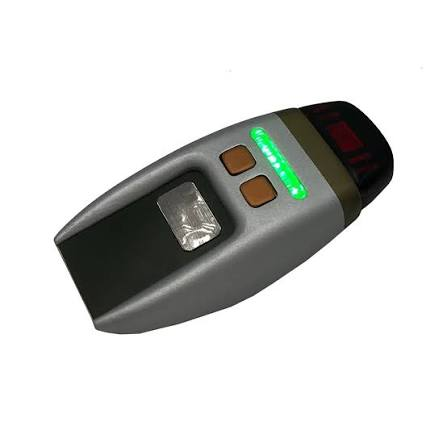
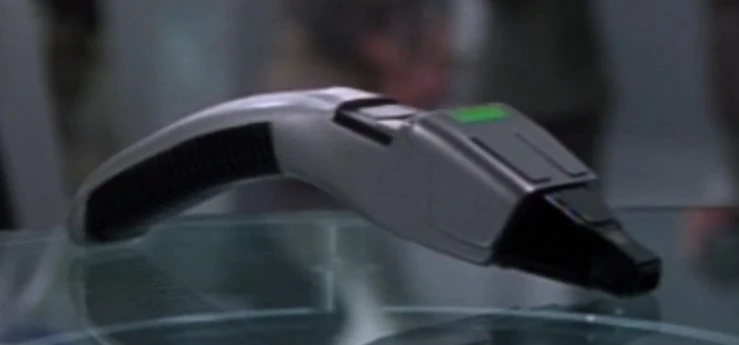
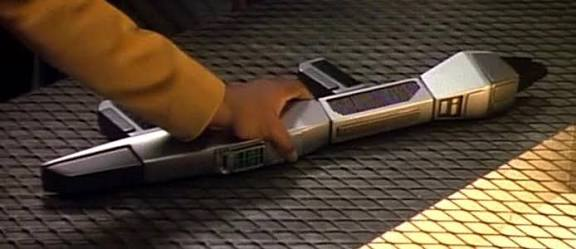
See Starfleet Hand Phasers and Phaser Rifles for the existing reference articles. See Portable Force Fields and Barriers for containment equipment.