STARFLEET TECHNICAL REFERENCE · 2371
Science and Remote Sensing Systems
USS Ermiana · 2371 · Shipboard sensors, remote probes, science laboratories and stellar cartography
Science turns observations from the ship’s sensors and probes into findings the bridge can use. The laboratories examine samples and recheck readings. Stellar Cartography puts those readings in spatial context for surveys, investigations and route planning.
Sensor arrays
| Array | Typical use | What to tell the bridge |
|---|---|---|
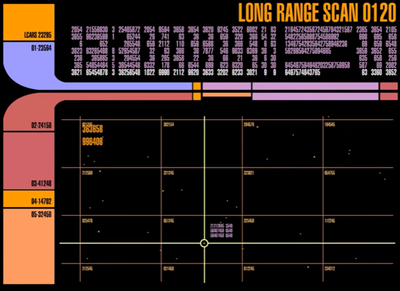
| Long-range | Survey ahead of the ship and flag distant contacts or anomalies for closer study. | Bearing, estimated distance, and which details remain unresolved. |
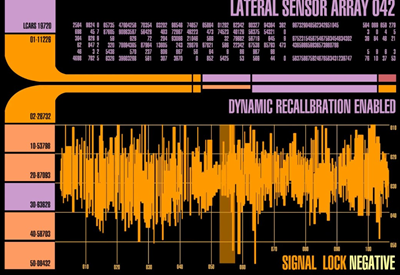
| Lateral and local | Observe nearby space, survey a planet from orbit, or compare returns from different sides of the ship. | Location, signal type, and any interference or limits on coverage. |
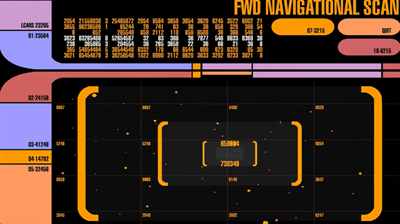
| Navigational | Track the ship’s position and motion and supply Flight Control with information about hazards along the route. | Hazard location, confidence in the plot, and when a revised observation is due. |
Distributed sensor pallets house specialised instruments. Data go to the ship’s computer over the Optical Data Network. A lost feed can affect readings from one part of the ship, while damage or interference ahead may require a course change or a lower speed. See Navigational Deflector for the equipment that clears the flight path.
Scan modes and limits
For handheld surveys and sample collection on away missions, see Starfleet Equipment.
- Passive scans collect energy or emissions that reach the ship. They can continue without transmitting a scan pulse.
- Active scans transmit a signal and analyse the return. They can provide a better measurement of a target, and other ships may detect the transmission.
- Targeted scans tune instruments to a particular signature, region or question after a broad survey. A second observation from a different angle can help separate a genuine contact from interference.
Range, resolution and environmental conditions affect the usefulness of a scan. If a reading supports two explanations, report both. Science can request a new bearing from Flight Control, more sensor time from Ops, or a probe to collect data from closer range.
Remote probes
Probes carry instruments beyond the ship’s immediate reach. A probe can take observations inside an anomaly, monitor a route ahead or keep collecting data after the Ermiana moves away. Plan what it needs to measure, where it can transmit from, and what would count as a successful return.
The Starfleet Probe Classes page covers the individual classes and roles.
Science laboratories
The Ermiana’s research facilities include stellar cartography, astrophysics, chemistry and biology laboratories in the Deck 13–16 research area. A lab scene can follow up on a sensor contact, compare samples or prepare a test before the bridge commits to an explanation. If a finding affects a patient, coordinate with Medical. If equipment needs power, repairs or extra sensor time, involve Ops or Engineering.
Stellar Cartography
| Workspace | Use it for |
|---|---|
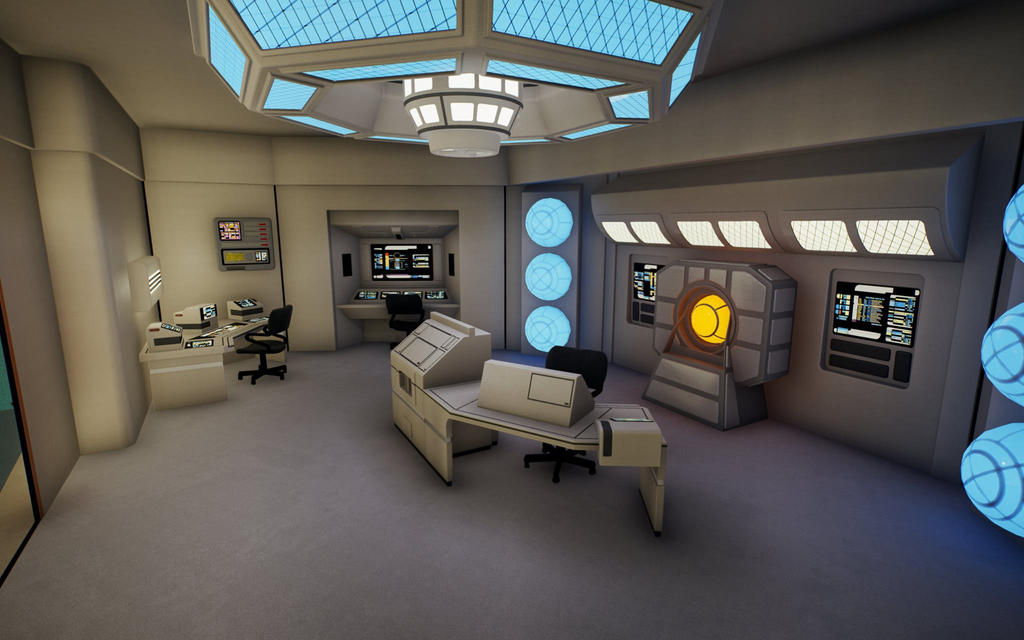
| Stellar Cartography Lab | Work at consoles to compare charts and sensor logs, correct a survey track, or prepare data for a route briefing. |
| Stellar Cartography Theatre | Use the wraparound display to brief several officers, compare projected trajectories, or show how the same observations fit together in three dimensions. |
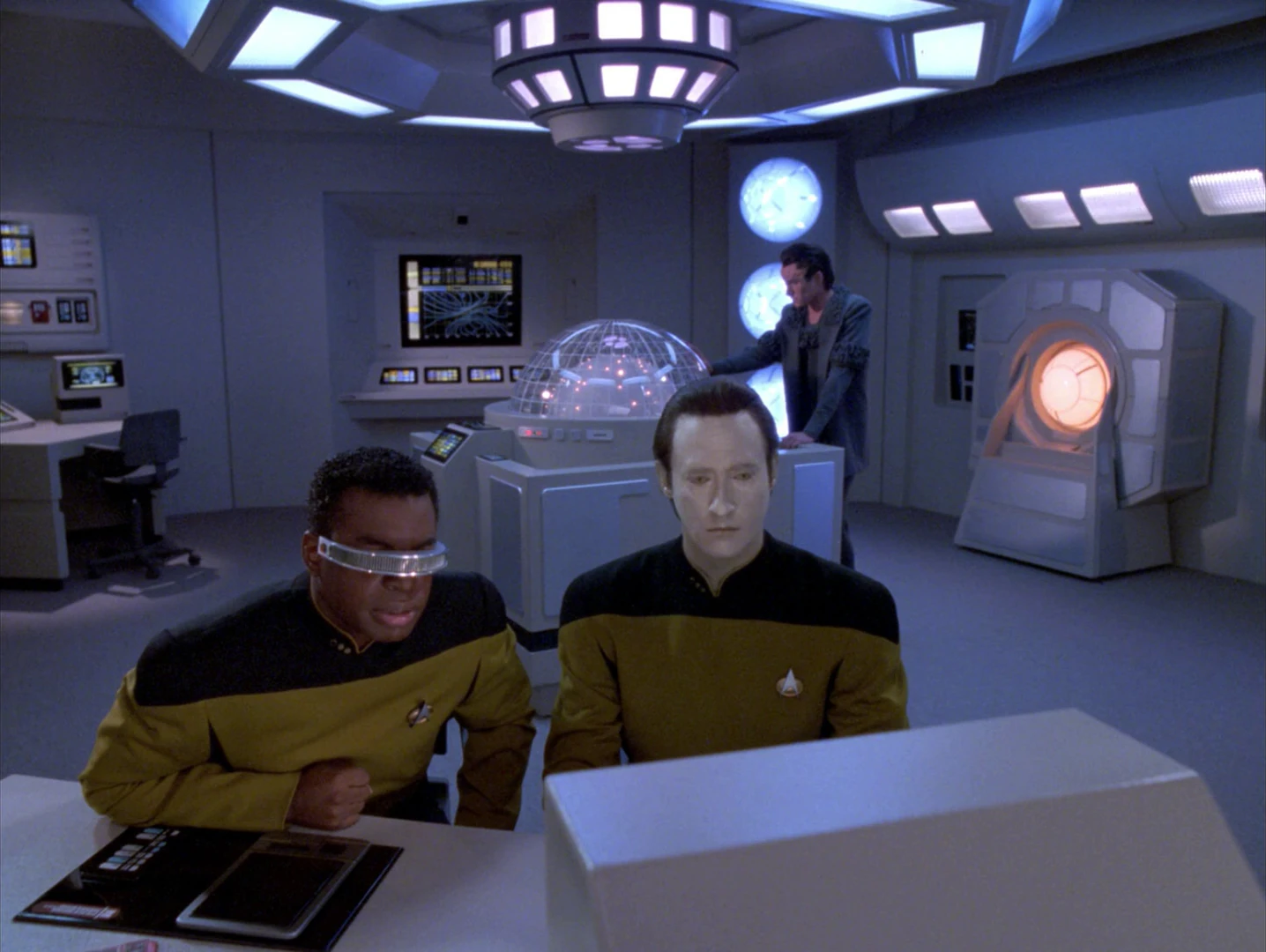
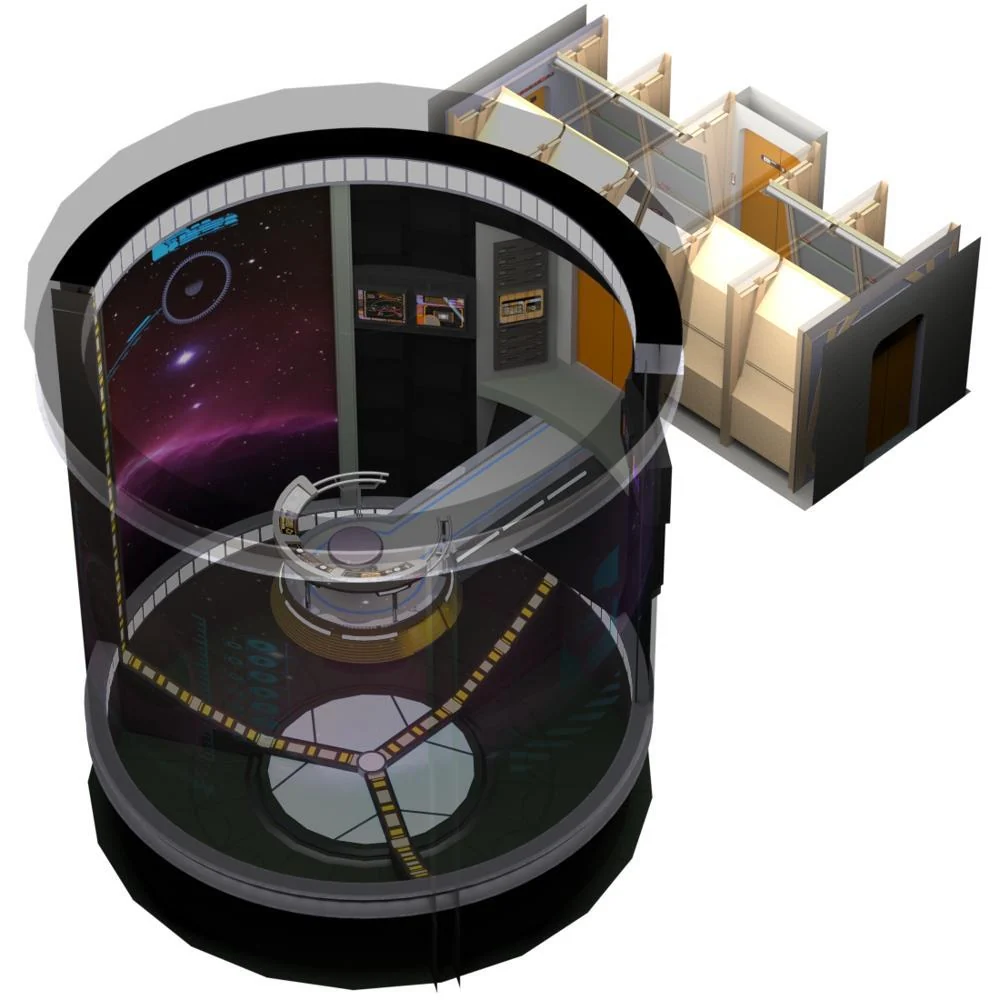
The illustrations show two Galaxy-class cartography arrangements. The theatre cutaway depicts the Enterprise-D facility seen in Star Trek Generations.
Reporting findings
“Science to bridge. We have two returns on the same bearing. One follows the local plasma flow. The second holds position. Request a new observation angle before we identify it.”
See the Science Department Quick Guide for role handovers and Bearings and Navigation for reporting a contact’s location.