
STARFLEET TECHNICAL REFERENCE · 2371
Emergency Operations
USS Ermiana · 2371 · Damage control, emergency medicine, rescue and evacuation
Use this guide to write a shipboard emergency from the first damage report through containment, casualty transfer and accountability. The Alert Conditions guide covers station assignments. Red Alert calls every crewmember to their assigned station. Command issues separate orders for muster, evacuation or abandon ship.
From the first report to a coordinated response
- Locate the incident. Give the ship section, deck and compartment. Report known injuries, the immediate hazard and any routes blocked.
- Establish who is responding. The bridge sets the alert and assigns priorities. Operations tracks status and access routes. Engineering handles damaged systems, Security controls access and Medical prepares for casualties.
- Confirm the next handover. Identify who has control of the affected area, where people are going and which hazards or missing persons still need someone assigned to them.
“Stardrive section, Deck 13. The corridor outside Shuttlebay 2 is sealed. Two crew are unaccounted for. Security is clearing a route to Shuttlebay 3.”
Damage control
| Incident | What changes aboard ship |
|---|---|
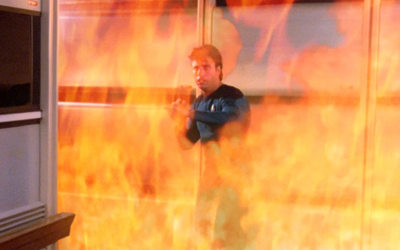
| Fire or pressure loss | Containment fields and isolation doors can seal off an affected section. Engineering checks power, pressure and adjacent compartments. Security redirects traffic and confirms who may still be inside. Reopen a route when the responding teams confirm that it is safe. |
| Structural integrity or inertial damping failure | Engineering reports where support is degraded and what manoeuvres the ship can still tolerate. Flight Control limits acceleration and course changes as directed. Command weighs holding position, accepting a tow or evacuating the affected section. |
| Impulse or warp casualty | Engineering isolates the affected equipment and reports usable propulsion and auxiliary power. Command can order a course change, request assistance or authorise last-resort warp core ejection if containment cannot be restored. After ejection, the crew must account for the loss of warp and any power systems it depended on. |
See Structural integrity and inertial damping and Propulsion fault reporting for the system details behind each response.
Casualty reception and overflow care
See Medical equipment for a field medic’s kit and handheld diagnostic tools.
Medical assigns a receiving location and tells responders which approach remains open. Main Sickbay is on Deck 12. During separated flight, confirm which section has the casualty and which facility can accept them. The Crew Support guide identifies additional Sickbay locations and the auxiliary stardrive facility.
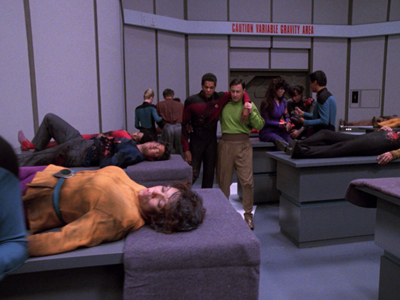
When Sickbay cannot take everyone, the Chief Medical Officer can assign an overflow treatment or holding space. A cargo bay may work if its environment, power and access are stable. Check that the area can accommodate the patients’ atmospheric needs. If shuttles are bringing in casualties, keep the active flight deck available and arrange a handover to Medical near the bay.
Evacuation and rescue
| Order or situation | What the crew needs to know |
|---|---|
| Clear a compartment or deck | Give an available route, muster location and instructions for anyone who needs assistance. Have the receiving watch record who has arrived. |
| Transfer to the saucer | If Command orders separation and the route is usable, transfer crew or civilians to the assigned section. Confirm who is aboard each section before they part and who commands each one. |
| Abandon ship | Use transporters when a safe destination and a reliable beam-out are available. Shuttles or runabouts can take evacuees to a rendezvous. Escape pods provide another way off the ship when time, routes or transfer capacity are limited. |
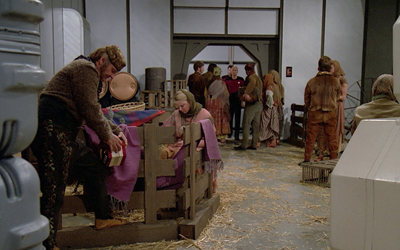
| Receive survivors | Set a receiving point, agree on a head count with the other vessel or rescue team, and direct casualties to Medical. Track who is still aboard the distressed vessel, in transit or unaccounted for. |
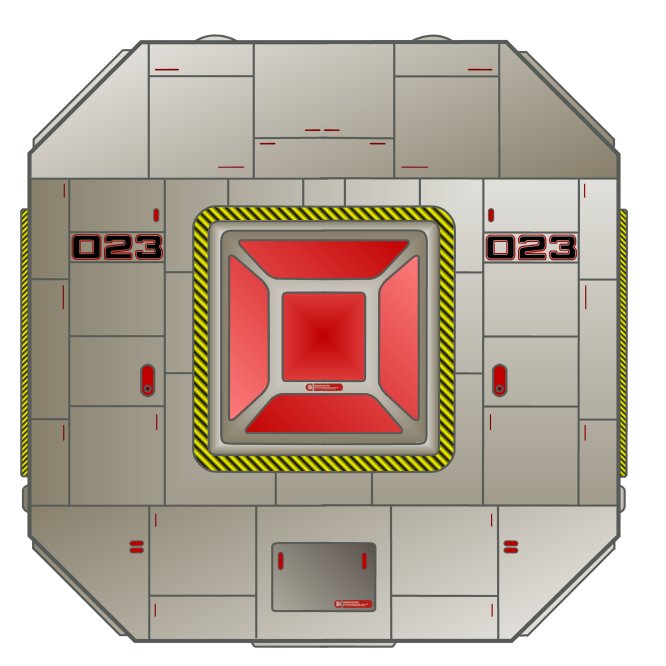
A Galaxy-class escape pod is an Autonomous Survival and Recovery Vehicle (ASRV). Its life support, communications and distress beacon sustain the occupants and help rescue craft locate them. Treat a launched pod as a separate contact and confirm where its occupants are taken after recovery.
See Transporters and Shuttlebay launch and recovery for scenes involving off-ship transfers.
Emergency saucer descent
During a surface rescue, the intact Ermiana stays in orbit. A separated Galaxy-class saucer may make a last-resort descent when it cannot maintain orbit. Once down, Command, Medical and Security account for survivors and coordinate rescue. Engineering checks what shelter, life support and communications remain available. See Planetary access and landing for the class comparison and the 2371 Enterprise-D example.