
Away Team Guidelines and Protocols
Plan who goes, who has the bridge, what the team carries, and how everyone gets back to the Ermiana. Use the mission table to give each character a job before the team leaves.
Before the team leaves
- Establish the objective. The bridge states what the team has authority to do, which conditions end the mission, and when it should ask for a new decision.
- Assign command. Name the team lead, their deputy, and the officer holding the bridge. The Executive Officer can lead a mixed team. A specialist may lead a mission within their department. When the Captain goes, establish who has the ship before departure.
- Choose a route in and a route out. Confirm whether the team will beam down or travel by shuttle. Agree who can call for extraction, where the fallback pickup will be, and which hazards can close either route.
- Set check-ins. Give the watch a check-in time or a mission milestone, an alternate channel, and an agreed response if contact is lost. A higher-risk mission may warrant a continuous link or more frequent reports where coverage permits.
“Bridge, Survey One. We’re at the northern access hatch. Static is cutting into the channel. If we miss the next check-in, hail the shuttle at the fallback site.”
Choose a team for the mission
These are example assignments. Choose the roles the scene needs and give the deputy a clear handover if the lead becomes unavailable.
| Mission | Possible lead | Roles to add | Mission kit |
|---|---|---|---|
| Survey | Chief Science Officer or designated specialist | Survey and sampling specialists, Medical or Security if indicated. | Tricorders, sample containers, survey log. |
| Diplomacy or first contact | Commanding Officer, Executive Officer or designated representative | Counsellor, cultural or language specialist, support as agreed with the host. | Combadges and PADDs. Additional kit follows the mission briefing. |
| Emergency medicine | Chief Medical Officer or field medical lead | Field medics, Science for unusual exposure, Operations for patient transfer. | Medical tricorders, medkits and suitable protective equipment. |
| Search and rescue | Officer designated by Command for the scene | Medical for casualties, Security for access control, Engineering for damaged structures or equipment. | Tricorders, medkits, a beacon and site-appropriate protective gear. |
| Damage control | Chief Engineer or designated repair lead | Engineering technicians, Operations for systems coordination, Medical or Security if conditions warrant. | Engineering kit, tricorder, schematics and protective gear. |
| Security or boarding | Chief Security/Tactical Officer or designated Security lead | Security personnel, Engineering for access or systems, and a medic when required. | Communications, protective equipment and authorised mission equipment. |
The Department Quick Guides describe how the relevant watch stations support the field team.
Clothing and equipment
Use the Ermiana uniform guide for ordinary duty wear. Choose field clothing, protective equipment or an environmental suit for the actual hazards at the site. In a vacuum or other environment that requires a sealed suit, establish who checks the suit and who is monitoring the team from the ship. If a suit is damaged, notify the watch and use the extraction plan agreed at the briefing.
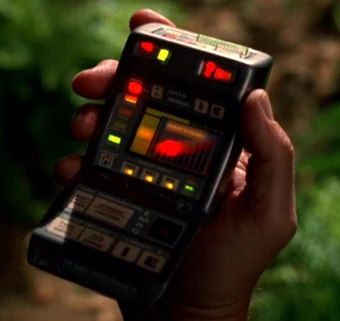
Combadges and PADDs cover communications and records. Choose general, engineering or medical tricorders for the readings the team needs. Weapons issue follows the mission briefing. See Starfleet Equipment for the 2371 reference and departmental kits.
Extraction, exposure and return
- Transporters. Operations and the transporter operator confirm that the ship can hold a reliable lock. If interference or shields make beam-out unreliable, tell the team which pickup site or shuttle option is available. Transporter reference
- Shuttle recovery. Give the pilot the team’s location, injuries or exposure concerns, and the fallback rendezvous. Shuttlebay control assigns the receiving bay. Docking and surface landings
- Unidentified contamination. Tell the bridge and Medical what may be affected, including people, samples and gear. Keep the affected team apart while Medical determines how to receive it. Transporter biofilters may assist. The receiving arrangement and any necessary isolation should be agreed before the team mixes with other personnel.
- Debrief. Confirm the head count, pass casualties to the designated receiving team, and hand off sample records, equipment and logs. Report missing people, material or unresolved hazards separately. Rescue and survivor accountability
First contact and the Prime Directive
The Prime Directive requires non-interference. On a pre-warp world or where contact status is uncertain, keep Starfleet personnel and technology out of view and avoid introducing equipment or information that could alter the society’s development. Report what the team observed and ask Command for direction. If contact occurs unexpectedly, keep the encounter calm, avoid commitments, and report what each side actually saw or heard. Command can decide whether to withdraw, continue an established contact or open a formal exchange.
A translator can help establish a conversation. It can take time to understand intent, custom and who is authorised to speak for a community. If Starfleet has already been seen, give Command the facts and keep the response proportionate to what happened. A missing tricorder or an injured crewmember can make this a command decision as well as a field problem.