STARFLEET TECHNICAL REFERENCE · 2371
Auxiliary Spacecraft and Shuttlebay Operations
USS Ermiana · 2371 · Galaxy-class shuttlebays, shuttle operations, docking and EVA
Use this guide to choose a bay, assign a craft and write a departure or recovery aboard the Ermiana. The Auxiliary Craft Manifest lists the ship’s named craft, their specifications and berths.
Shuttlebays and berths
| Facility | Location | Typical use |
|---|---|---|
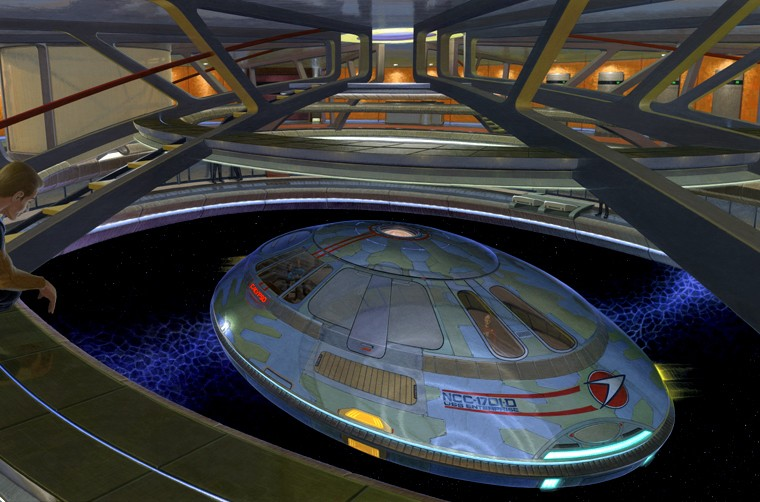
| Main Shuttlebay (Shuttlebay 1) | Deck 4 · Saucer | Primary flight deck for launches and recoveries, cargo movements and routine servicing. The Shuttle Repair Unit and Cargo Bays 1–6 are on the same deck. |
| Shuttlebays 2 and 3 | Deck 13 · Stardrive | Secondary flight decks for local shuttle and workpod operations. They can support the stardrive section during separated flight, subject to the craft and bay being available. |
| Captain’s Yacht berth | Deck 16 · Underside of the saucer | Dedicated docking position for Sapphire Iona, the ship’s diplomatic and VIP transport. |
During saucer separation, the two sections run their own flight operations. A returning pilot should identify the section and confirm the receiving bay before beginning the approach. The published Ermiana deck listing gives the bay and yacht locations.
Launch and recovery
Shuttlebay control manages the deck and approach traffic. The bridge coordinates the ship’s course and operational status. The shuttle pilot reports readiness and follows clearance. Engineering handles technical faults, Operations coordinates cargo and passengers, and Medical can meet a casualty transfer on arrival. See the Flight Control Quick Guide for duty roles.
| Stage | Departure | Return |
|---|---|---|
| Request | Report craft, assigned bay, destination, crew and any unusual load. | Hail the ship, report condition and request recovery. Flag injuries, damage or contamination early. |
| Clearance | The bay controller checks the deck, doors, atmospheric containment and traffic before clearing the craft for departure. | The bay controller assigns a bay and approach or places the craft in a holding pattern. The bridge coordinates any change to the ship’s heading or alert posture. |
| Handover | Report clear of the bay. Resume the mission once clear of the ship’s traffic pattern. | Land at the assigned position, secure the craft and hand over people or cargo to the receiving team when the deck is clear. |
A damaged craft may need an alternate bay, tractor assistance or a transporter extraction if conditions permit. An unknown atmosphere or suspected contamination can lead to a hold outside while Medical and Operations arrange reception. During Red Alert, all personnel report to assigned stations and the bridge coordinates whether flight operations can continue.
Choose a craft for the scene
| Job | Craft on the manifest |
|---|---|
| Local transfers and close inspection | Type 16 shuttlepod or Type 18 shuttlepod for work in the immediate area. |
| Personnel and away teams | Type 6 for a routine short-range flight, Type 7 for a medium personnel shuttle, or Type 8 for an assignment requiring greater range. |
| Freight | Type 9A cargo shuttle for heavy loads, relief supplies or equipment. |
| Survey or extended detached duty | Danube-class runabout with a module or fit appropriate to the mission. |
| Diplomatic and VIP transfer | Sapphire Iona, the integrated Galaxy-class Captain’s Yacht, for local ceremonial and diplomatic travel. |
| Hull work and cargo handling | Work Bee for close maintenance or cargo handling. Sphinx workpod for industrial manipulation and tug work. |
Docking and surface landings
The Ermiana remains in orbit during surface operations. This section deals with small-craft landings. See Planetary access and landing for Galaxy-, Intrepid- and Defiant-class capabilities.
For a docking with a station or another ship, the receiving controller assigns the berth or port. Operations coordinates pressure, atmosphere and the transfer of people and cargo once the connection is secure. Confirm whether the scene calls for a shuttle landing in a bay or a docked transfer through a sealed connection.
For a planetary landing, Flight Control checks the craft’s atmospheric capability and available landing sites. In scenes without a prepared pad, the pilot can work from sensor reports and advice from the away team before committing to an approach. Keep a return or extraction option in mind when weather, terrain or interference makes the landing uncertain.
EVA and utility work
Engineering can send a Work Bee to inspect the hull, move a cargo frame or position equipment. Use a Sphinx workpod when the job calls for heavier handling. Suit teams leave through an airlock, keep in contact with the ship and coordinate their route with the bridge and flight deck. Give the team a clear way back if the worksite changes or the ship needs to manoeuvre.
See Body Armour and Protective Equipment for the 2371 environmental suit reference.